
By: Trey Dunham
The Bible consistently teaches that God gives grace—unmerited favor, kindness, help, and empowerment—to those who are humble, while he opposes or resists the proud. This principle appears most directly in the proverb:
“Surely he scorns the scornful, but gives grace to the humble” (Proverbs 3:34, NKJV).
True humility is spiritual honesty. It is the recognition that we cannot sustain ourselves on our own strength and we need help.
In the ancient world, a widow was the personification of vulnerability. Without a husband or a social safety net, the widow had two choices: despair or total dependence on God.
During a catastrophic famine, the Widow of Zarephath (1 Kings 17) was at her absolute breaking point, gathering sticks to prepare a final meal for herself and her son before they succumbed to starvation. When the prophet Elijah asked her to share that meager portion, she demonstrated the ultimate posture of humility by prioritizing others—and trusting God to provide for her and her son—over her own survival instincts. In response to this, God poured out a continuous stream of grace, miraculously ensuring her jars of flour and oil never ran dry until the rains returned.
When the widow of Zarephath gave her last bit of flour to the prophet Elijah, she wasn’t just being nice, she was practicing deep humility by acknowledging that her life was entirely in God’s hands.
In the New Testament, we read of another widow visiting the temple to give an offering. Others may not have known it, but Jesus understood what was happening and he was sure to point it out. As she deposited two small coins into the treasury, he said,
“Truly I tell you, this poor widow has put more into the treasury than all the others. They all gave out of their wealth; but she, out of her poverty, put in everything—all she had to live on.”
(Mark 12:43-44, NIV).
It is amazing to think that someone would give “all they had to live on.” This woman demonstrated her complete and utter reliance on God, the very essence of what it means to be humble.
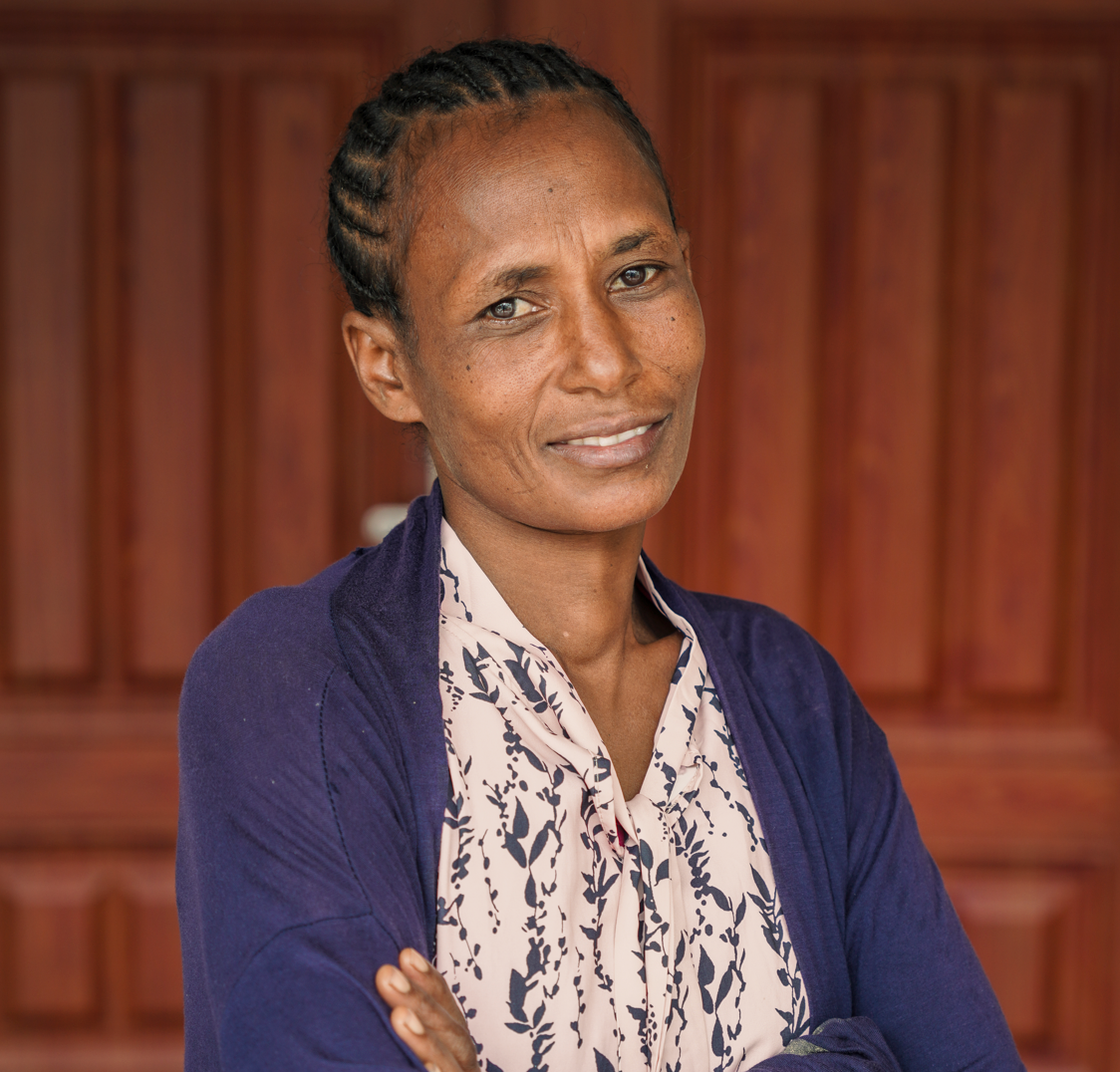
We see this same humility in many of the caregivers in our Home Based Care programs. Shtaye, a single mother in Ethiopia, is just one example:
“My name is Shtaye; my daughter is seven years old. Her father left me when I was pregnant because we had a fight. It was difficult for me to raise a child alone, and we had nothing to eat with my child, so I used to beg on the street.
“When I was in a lot of trouble, someone referred me to this project and I came here for help. After I joined, they gave us flour, oil, and soap. We had enough from month to month. I took a loan and started working. I started growing onions and potatoes. When it became unprofitable, I changed to a coffee business.
“I am in a good place now after starting out begging, thank God.
“When I graduate from this program, I will be happy because I will be able to stand on my feet, and at least I will know I was able to change. God has helped me.
“May God bless those who helped me from abroad, and may their families be blessed. Thank you. Glory and praise be to God.”
The reason widows like the one in Zarephath, or the temple, or Shtaye receive such profound grace is that they have no “social armor” or pride left to protect them. They understood their deep need and put themselves completely in the hands of God. As Jesus taught in the Beatitudes,
“Blessed are the poor in spirit, for theirs is the kingdom of heaven” (Matthew 5:3, NIV).
To be “poor in spirit” is the ultimate form of humility—it is acknowledging that we are spiritually bankrupt without God’s help. And in response to that, God makes an amazing promise of grace: the kingdom of heaven will be yours.